Club and Community | 19 August 2026
Swimming Australia releases aquatic facility guides
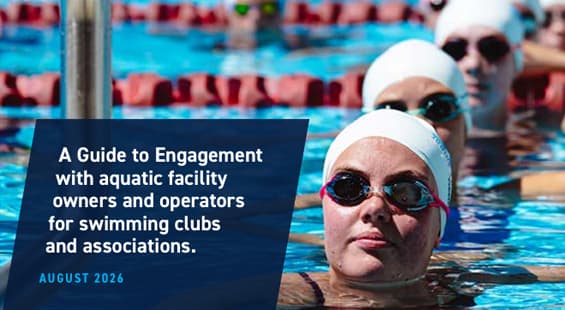
Swimming Australia has launched two new national aquatic facilities resources aligned with the Swim Well Strategy and its focus on promoting participation, strong partnerships and vibrant club and facility environments.
The resources celebrate Australia as a swimming nation with a vast network of aquatic facilities that serve as essential and valuable community assets supporting swimming as a life skill and a sport for life.
They also acknowledge that Australia’s aquatic facilities operate in an increasingly complex environment, characterised by ageing infrastructure and operating cost pressures, with owners and operators balancing demands from a broad range of user groups while seeking to deliver safe, sustainable and inclusive community facilities.
The new Aquatic Facilities Engagement Guide and the Aquatic Facilities Development Guide have been developed to support swimming clubs as well as facility owners and operators to work together to support vibrant facility and participation environments for swimming to thrive.
The Aquatic Facilities Engagement Guide is a practical resource for swimming clubs, facility owners and operators seeking to build constructive, long-term relationships. It helps clubs to prepare for engagement and explain their needs, while supporting owners and operators to understand club priorities, decision-making pressures, water-space requirements and opportunities for more coordinated partnerships.
The Aquatic Facilities Development Guide helps swimming clubs participate more effectively in discussions about new, renewed or upgraded aquatic facilities, while also giving owners, operators and project partners clearer insight into the practical requirements for swimming at every level. It supports Swim Well’s Sport Growth focus on facilities by explaining training and competition requirements, accessibility, club development, programming, community use and the design features needed to support swimming participation.
Together, the guides provide a clearer framework for advocating, planning and partnering. It is intended these resources will contribute to improved outcomes and investment in swimming pool infrastructure to ensure that pools remain accessible and fit-for-purpose for all Australians, supporting the growth and success of swimming and the many benefits that pools deliver for communities
Swimming Australia extends its thanks to the individuals and organisations who contributed to the development of these Guides, particularly Mr Graeme Stephenson as well as representatives amongst Swimming Australia’s Member Organisations, Masters Swimming Australia and government and aquatic industry representatives.
“Swimming clubs are at the heart of our sport and are often the strongest advocates for the needs of their local swimming communities. At the same time, facility owners and operators play a critical role in providing safe, sustainable and accessible places for swimming to thrive.
“These guides have been developed as part of Swimming Australia’s commitment to the Swim Well Strategy, giving all parties practical support, shared language and clear steps for working through facility planning and access discussions. By helping clubs communicate their value and better understand facility priorities, we can support stronger partnerships, vibrant club and facility environments and better outcomes for swimmers at every level,” said Rob Woodhouse, Swimming Australia CEO.
“Across New South Wales, clubs rely on positive and sustainable relationships with facility owners and operators. The Engagement Guide gives clubs and facility partners a practical framework to prepare for discussions, understand each other’s priorities and work collaboratively toward fair and stable access arrangements. It will be a useful resource for strengthening relationships and contributing to successful local facility outcomes,” said James Hickman Swimming NSW CEO.
“Swimming clubs need to be part of facility planning conversations as early as possible and those conversations are strongest when owners, operators and project partners have a clear understanding of club needs and facility requirements. The Development Guide will help all parties consider the issues that matter in new and upgraded facilities, from training and competition requirements to accessibility, programming and community use,” said Michelle Doyle, Swimming SA CEO.
“Western Australia has a strong and diverse swimming community that depends on access to well-planned, well-managed aquatic facilities across metropolitan, regional and remote areas. These guides will help clubs, facility owners and operators have more productive conversations about access, programming and future facility needs, ensuring swimming can continue to grow and support positive outcomes for communities across WA,” said Emily Randall, Swimming WA CEO.
“Masters clubs play a vital role in keeping adults active, connected and engaged in swimming for life. Masters clubs need access to facilities that are welcoming, accessible and well managed, and facility owners and operators need clear information about how club programs contribute to participation, community health and sustainable facility use. These resources will help clubs and facility partners discuss those needs constructively and recognise the broad community value of club-based swimming,” said Rob Abernethy, Masters Swimming Australia General Manager.
The Aquatic Facilities Development Guide and the Aquatic Facilities Engagement Guide are now available on the Swimming Australia website here.
Swimming clubs, associations, facility owners and operators are encouraged to use the guides when preparing for conversations about facility access, planning for future needs, contributing to new or upgraded facility projects or strengthening long-term partnerships.
Swimming Australia will continue working with its member organisations, clubs, facility owners, operators and the broader aquatic industry to advance the Swim Well Strategy and support stronger engagement and facility environments that enable inclusive and positive swimming experiences for all Australians.